Choosing an AC contactor requires more than matching a current number: the coil circuit, load circuit, utilization category, motor duty, protection, and installation conditions all affect the correct device. By the end, you will be able to identify what a contactor does, distinguish it from related equipment, and build a defensible selection from the load nameplate and operating conditions.
Key takeaways
- Match AC-3 contactor ratings to motor starting and stopping duty.
- Choose the coil voltage from the control circuit, not the load supply.
- Verify voltage, current, endurance and short-circuit protection before purchase.
- Use overload protection with motor contactors; a contactor alone cannot protect windings.
What an AC Contactor Does and How It Differs from Other Switching Devices
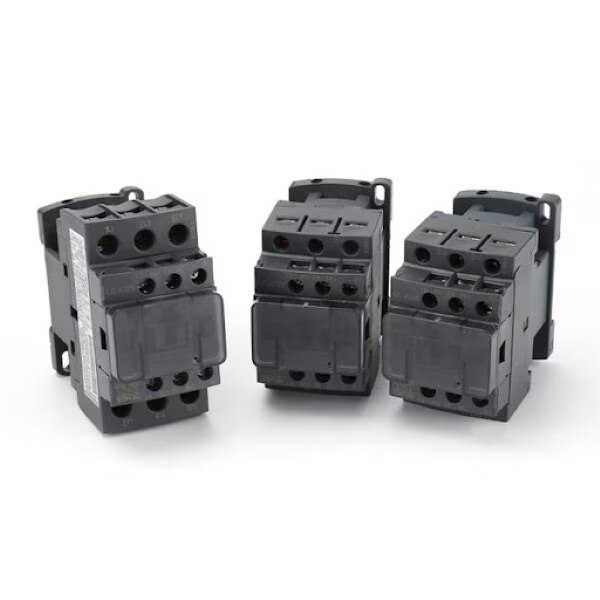
An AC contactor uses an electromagnetic coil circuit to open and close a separate switched load circuit, often for a motor, heater, pump, or lighting bank. Energising the coil pulls the armature onto the magnetic core, closing the main contacts; removing coil power opens them and stops the load.
Its value is frequent, remote switching from a low-current control circuit.
| Device | What it does | Choose it when |
|---|---|---|
| AC contactor | Switches higher-power AC loads repeatedly | You need remote control, interlocking, or motor starting and stopping |
| Relay | Switches smaller loads or signals | The load current is low and compact control switching matters; this is the key relay vs contactor comparison |
| Manual switch | Connects or disconnects a circuit by hand | An operator will control the load locally and switching is infrequent |
| Circuit breaker | Interrupts overloads and short circuits | You need fault protection, not routine operating cycles |
| Motor-protection circuit breaker | Provides motor overload and short-circuit protection, with manual isolation | You need motor protection; pair it with a contactor for remote or frequent operation |
| RCCB | Trips when residual current indicates earth leakage | You need shock and leakage protection, not overload protection or contactor duty |
A standard AC contactor does not protect a motor from overload or short circuit. Add a separately coordinated overload relay or motor-protection device, set from the motor nameplate and protection scheme.
Choose a contactor by utilization category, operational voltage, motor power, starting duty, switching frequency, and duty cycle—not current alone. Use the manufacturer’s AC-3 or horsepower table. A four-pole model does not automatically require neutral switching; use three poles for a motor with no neutral, and verify simultaneous pole operation when switching a neutral.
The Parts Inside a Contactor and a Three-Phase Motor Starting Sequence
A three-phase motor starts when a low-current control circuit energizes the contactor coil, not when the motor current flows through that coil.
1. Press the start button. Control voltage reaches the contactor coil, creating a magnetic field in the fixed magnetic core.
2. The magnetic core pulls the armature across the gap. The armature mechanically closes the main contacts, connecting the three incoming phases to the motor. Most motor circuits use three poles because the motor has no neutral conductor.
3. At the same movement, auxiliary contacts change state. A normally open auxiliary contact can seal in the start command after you release the button; a normally closed auxiliary contact can provide interlocking or a control signal.
Use a declared mirror or mechanically linked contact for safety feedback, not an ordinary auxiliary contact assumed to prove that the main contacts opened.
4. When the motor reaches speed, the contactor remains closed through the seal-in circuit. The arc chute controls and cools the arc produced as the power contacts close or open under load.
5. Press the stop button, or let an overload relay open the control circuit. The coil de-energizes, the armature returns by spring force, and the main contacts separate to remove all three phases. The arc chute extinguishes the opening arc.
A standard contactor does not provide overload or short-circuit protection. A separately coordinated overload relay or motor-protection device must interrupt the coil circuit when excessive motor current or a fault condition occurs.
Where AC Contactors Are Used and Which Switching Duty Applies
Heaters, resistance banks, pumps, fans, compressors, conveyors, lighting groups, and power-factor-correction capacitor steps commonly use contactors. The load’s switching duty matters more than its running current: a contactor rated for 40 A in AC-1 is not automatically suitable for a 40 A motor.
| Category | Load behaviour | Typical application |
|---|---|---|
| AC-1 | Non-inductive or slightly inductive load; modest switching inrush | Resistance heaters, ovens, distribution circuits |
| AC-3 | Squirrel-cage motor starts and switches off after reaching speed | Pumps, fans, compressors, conveyors |
| AC-4 | Motor starts, stops, plugs, or reverses while running; high electrical and mechanical stress | Jogging, inching, reversing drives, frequent stop-start control |
| AC-6b capacitor switching | Capacitor energisation creates a sharp transient inrush | Power-factor-correction capacitor banks and steps |
Use the manufacturer’s AC-3 current, motor kilowatt or horsepower, operational voltage, starting frequency, and duty cycle for a motor. Do not convert an AC-1 ampere figure into motor power; the contacts can weld or the arc system can fail under starting and interruption stress.
Choose AC-4 only when the control sequence actually includes jogging, plugging, or rapid reversal. For AC-6b capacitor switching, specify a capacitor-duty contactor with pre-insertion resistors or another inrush-limiting arrangement, then check the number of steps and switching frequency. A capacitor bank is not ordinary AC-1 service.
How to Select Coil, Current, Voltage, and Endurance Ratings
Start with the load’s switching duty, not the contactor’s largest ampere number. Compare the contactor’s Ue rated operational voltage and Ie rated operational current at the exact utilization category, frequency, and load voltage you will use. Check Ui rated insulation voltage separately; it indicates insulation withstand, not permissible load current.
| Load | Compare | Why the mismatch fails |
|---|---|---|
| Motor | AC-3 Ie, Ue, horsepower or kilowatt table, starting duty, and electrical endurance | A generic ampere conversion can undersize the contactor during starting |
| Heater | AC-1 Ie, Ue, Ith conventional free-air thermal current, and switching frequency | Resistive ratings do not prove suitability for inductive loads |
| Lighting bank | Lamp type, inrush current, Ie, Ue, and electrical endurance | LED drivers and ballasts can draw several times their running current |
| Capacitor step | Capacitor-duty rating, step size, peak inrush, switching frequency, and pre-insertion resistors | Ordinary AC-1 contacts can weld under capacitor energization |
Match the coil marking to both voltage and frequency. A 24 V AC coil, 110 V AC coil, and 230 V AC coil require different control supplies; a 24 VDC coil is not an interchangeable substitute.
Confirm the transformer or PLC output can deliver pickup inrush, and check that any suppression module does not delay release beyond the control sequence.
Finally, compare mechanical and electrical endurance with expected operations. For IEC equipment, do not replace an AC-3 selection with a NEMA size by label alone: match horsepower, current, voltage, duty, endurance, and short-circuit coordination.
Protection, Installation Conditions, and a Practical Buying Checklist
A contactor does not protect a motor from sustained overload. Install an overload relay or motor-protection device, set from the motor nameplate and protection scheme, and coordinate it with the contactor’s AC-3 rating.
1. Specify the upstream fuse or circuit breaker, prospective fault current, and contactor SCCR together. Request the manufacturer’s test documentation for Type 1 coordination if damaged starter components can be replaced, or Type 2 coordination when the starter must remain fit for service after the specified short-circuit test.
2. Check the derating table for ambient temperature, enclosure heat, altitude, mounting orientation, conductor size, and adjacent-device heating. A nameplate current at 40°C in free air is not automatically available inside a crowded panel.
3. Switch the neutral only when the circuit design requires it. Use a device with simultaneous pole operation and prevent the neutral from opening while energized phases remain connected; a three-phase motor circuit normally needs three poles, not a switched neutral.
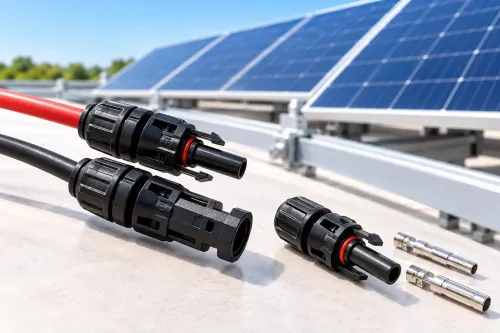
4. Never use an AC contactor for PV DC switching or battery feeders. Select a DC-rated device for the circuit voltage, current, polarity, interruption duty, and fault current because DC arcs lack AC’s natural current zero.
5. For an IEC-to-NEMA substitution, compare coil voltage, motor horsepower and full-load current, utilization duty, terminal layout, enclosure, NEMA rating, mechanical endurance, electrical endurance, and auxiliary-contact logic. A mirror contact must provide the required safety feedback, not merely fit the socket.
Yueqing Growmore Electric Co can be asked for the coordination tables, derating data, SCCR, and endurance ratings before you approve a bill of materials.
Frequently asked questions
What does an AC contactor do?
An AC contactor uses an electromagnetic coil to switch a separate load circuit, such as a motor, heater, pump or lighting bank.
How does an AC contactor differ from a relay or circuit breaker?
A contactor is designed for frequent switching of higher-power loads, while a relay handles lighter control circuits and a circuit breaker interrupts faults and provides isolation.
What happens when a three-phase motor starts through a contactor?
The coil energises, the armature closes the main contacts, and all three phases reach the motor. An overload relay opens the control circuit when sustained overcurrent exceeds its setting.
How do you select an AC contactor rating?
Select the coil voltage from the control supply, then match utilization category, motor power, operating voltage, current, switching frequency and electrical endurance to the application.
What protection does an AC contactor need?
A motor circuit needs short-circuit protection and an overload relay, with conductor sizing, coil suppression and enclosure selection suited to the installation conditions.